Quick answer: Most people today eat 15 to 20 times more omega-6 fat than omega-3, when the ideal ratio is closer to 1:1 or 4:1. Because omega-6 promotes inflammation in excess while omega-3 calms it, this imbalance can keep the body in a low-grade inflammatory state that interferes with fat burning and insulin sensitivity — making weight loss harder even when calories are in check.
You’ve probably heard by now that “healthy fats” belong in a good diet. And that part is true, your body genuinely needs fat to function.
But what almost nobody tells you is that not all fats behave the same way once they’re inside you. One hidden imbalance sitting quietly in most kitchens right now may be fueling inflammation more than any single food you’ve been told to avoid.
Two Fats You Need, One Ratio That’s Gone Wrong
It comes down to two essential fats, omega-6 and omega-3, and your body genuinely needs both of them. The problem was never that you’re eating fat.
The problem is that the ratio between these two has quietly drifted so far out of balance that most of us don’t even realize it happened.
The Ideal Ratio Is 1:1 to 4:1 — Most People Are at 15:1 or Higher
Decades ago our diets carried a reasonably healthy balance of these fats, something like one to four parts omega-6 for every one part omega-3. That’s roughly what the human body evolved eating.
Today, the average person eats somewhere between fifteen and twenty times more omega-6 than omega-3. Once you understand why that matters, you start looking at your pantry differently.
Omega-6 fats, eaten in this kind of excess, promote inflammation, while omega-3 fats do the opposite, they calm it. When the balance tips this far toward omega-6, your body ends up living in a low-grade state of alarm.
That alarm state interferes directly with fat burning, insulin sensitivity, and metabolic health in general, even when nothing about your life looks unhealthy on the surface.
Where Omega-6 Hides, Even in “Healthy” Foods
| High in Omega-6 | High in Omega-3 |
|---|---|
| Soybean oil, corn oil, canola oil | Fatty fish (salmon, sardines, mackerel) |
| Sunflower oil, safflower oil | Flaxseeds, chia seeds, walnuts |
| Generic “vegetable oil” blends | Pasture-raised eggs |
These oils have found their way into nearly every packaged food you can think of, salad dressings, crackers, granola bars, even the snacks sitting in the organic aisle. They’re cheap, shelf-stable, and food companies have built entire product lines around them.
Omega-3s, meanwhile, come from a much smaller and more specific list. And there’s a catch most people never hear about.
Plant-based omega-3s, the ones in flax and chia, have to be converted by your body into their active forms, EPA and DHA, before they can do anything useful. That conversion is genuinely inefficient, only about ten to fifteen percent of it ever makes it through.
That’s exactly why whole fish, not just a supplement, carries so much more weight than people assume.
How This Quietly Affects Your Weight
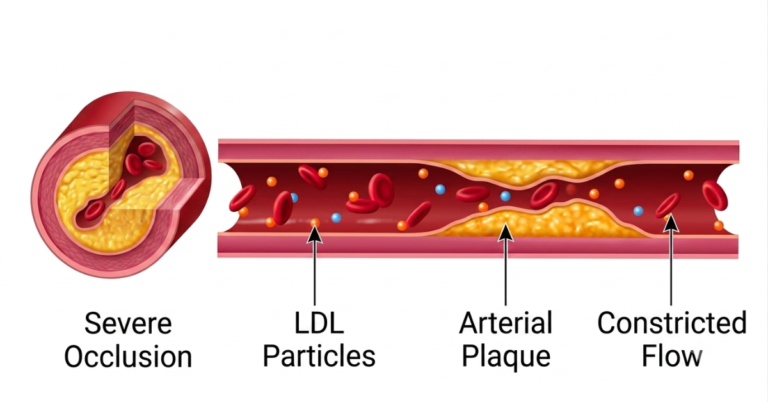
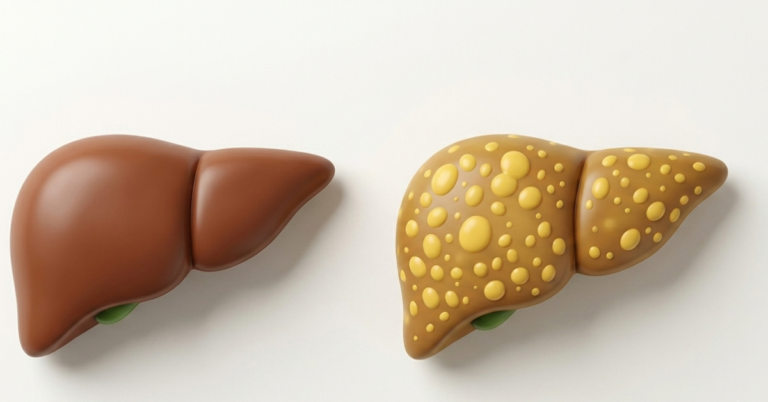
Chronic inflammation from this imbalanced fat ratio disrupts insulin signaling, which means your body starts storing fat instead of burning it. It also increases visceral fat, the kind that gathers around your organs.
It fuels cravings and those energy crashes that hit mid-afternoon for no obvious reason, and over time it slows your metabolism down in ways that have nothing to do with willpower.
In other words, even if you’re eating fewer calories than you used to, an inflamed metabolism can still hold onto weight as a protective response. Your body isn’t just counting calories, it’s reading signals, and inflammation is one of the loudest.
A Simple Shift That Makes a Real Difference
You don’t need to overhaul your entire kitchen overnight, and honestly, I’d encourage you not to try. That kind of all-or-nothing approach rarely lasts.
Start with one change instead:
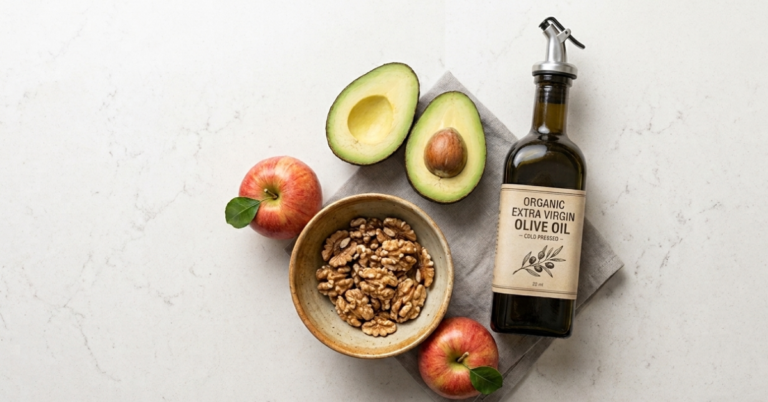
- Swap vegetable oils for olive oil or avocado oil, both naturally low in omega-6
- Choose pasture-raised eggs when you can (ratio of roughly 1.3:1, vs. 19.4:1 in conventional eggs)
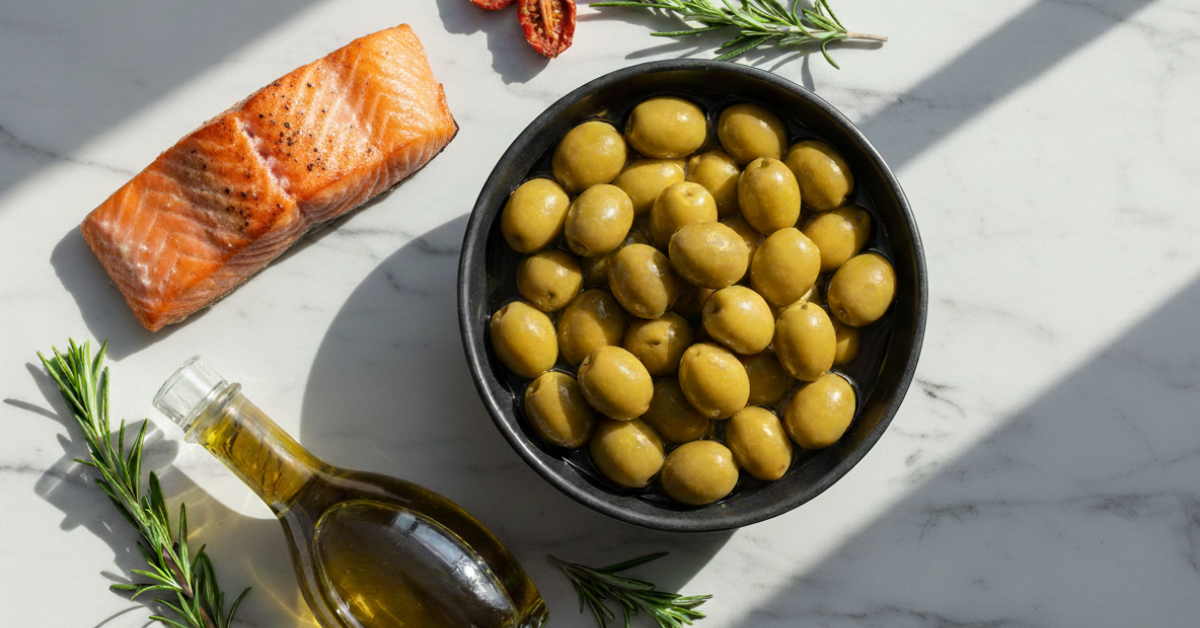
- Eat fatty fish two to three times a week, salmon, sardines, herring, whatever you enjoy
- Read labels closely, if soybean, corn, or vegetable oil is near the top, it’s likely working against you
This isn’t about chasing perfection. It’s about shifting the balance back toward calm.
What About Fish Oil Supplements?
Research consistently shows that fish oil pills don’t offer the same benefit as eating whole fish. The reason comes down to how food actually works.
Food functions as a system, fat, protein, vitamins, and minerals all interacting together. Isolating one component in a capsule rarely replicates what the whole food does.
So if you’re able to, choose the fish over the pill.
In My Clinical Practice
This is one of the imbalances I see most often and address least dramatically, because the fix was never about willpower, it was about clarity.
By reducing the hidden oils and increasing real omega-3 sources, you’re not just “eating healthier” in some vague sense. You’re calming the fire that’s been keeping your weight, and your energy, stuck in place.
Start small. Be kind to yourself while you do it. Your metabolism, and your future self, will thank you for it.
FAQ
What is the ideal omega-6 to omega-3 ratio? Somewhere between 1:1 and 4:1 is considered healthy. Most people today eat closer to 15:1 or even 20:1, largely due to vegetable oils in packaged foods.
Which oils are highest in omega-6? Soybean oil, corn oil, canola oil, sunflower oil, safflower oil, and most generic “vegetable oil” blends are all high in omega-6 and are common in packaged and processed foods.
Are fish oil supplements as good as eating fish? No. Research suggests whole fish offers benefits that isolated fish oil supplements don’t fully replicate, likely because nutrients work together as a system rather than in isolation.
Do pasture-raised eggs really have a better fat ratio? Yes. Pasture-raised eggs have an omega-6 to omega-3 ratio of roughly 1.3:1, compared to about 19.4:1 in conventional eggs.