How Your Gut Microbiome Directly Controls Immune Inflammation
Quick Answer: Roughly 70% to 80% of your entire immune system lives in your gut. Separated from trillions of bacteria by a wall only one cell thick, your immune system relies on signals from the food you eat to decide whether to stay calm or trigger body-wide inflammation.
When most people think of the immune system, they picture white blood cells fighting off a cold.
What is often missed in standard health advice is that most of your immune defenses actually live directly inside your digestive tract.
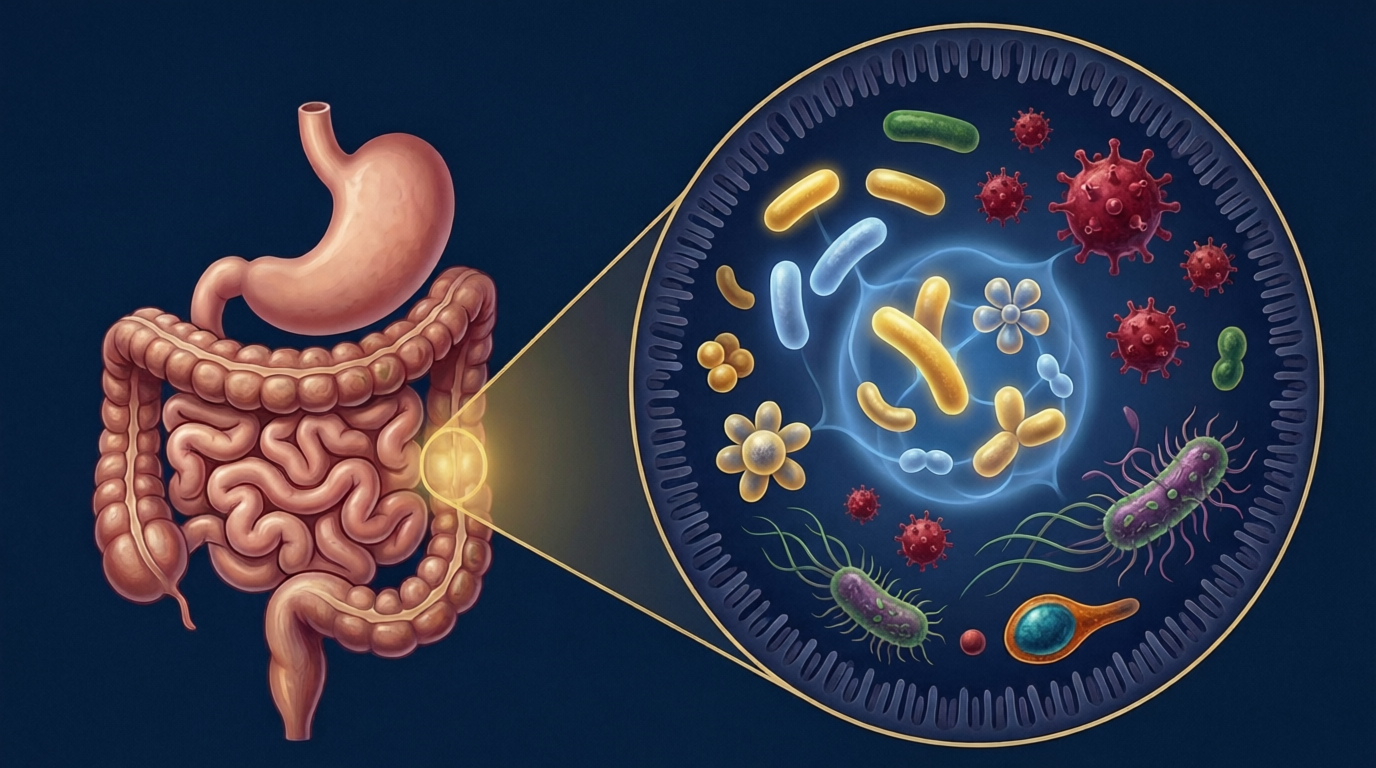
Because they live so close together, your gut microbes and immune cells constantly talk to each other through the compounds created from your daily meals.
The Language of Gut-Immune Signaling
Your gut microbes act like a small processing factory inside your body.
Depending on what you eat, they release chemical messengers across your gut wall.
These messengers constantly tell your immune system to either stay calm and balanced or switch on chronic inflammation.
1. The “Calm” Signal: Short-Chain Fatty Acids (SCFAs)
When you eat whole plant fibers, your good gut bacteria break them down into short-chain fatty acids (mainly butyrate).
Butyrate acts as the main fuel for your gut lining cells, helping seal the wall tight so nothing leaks through.
| Signal Type | What Happens in Your Body |
| How It’s Made | Good bacteria ferment plant fibers into health-promoting fatty acids (like butyrate). |
| Immune Result | Calms down inflammation and trains your immune system not to attack your own body (prevents autoimmune flare-ups). |
These calm signals keep your overall immune system balanced, peaceful, and in control.
2. The “Alarm” Signal: Endotoxemia (LPS)
On the other hand, diets high in ultra-processed foods, refined sugars, and harsh oils starve good bacteria and let harmful bacteria overgrow.
These bacteria carry toxic fragments called LPS on their outer shells. When your protective gut lining gets thin, these toxins leak directly into your bloodstream.
| Signal Type | What Happens in Your Body |
| How It’s Made | A weakened gut lining allows bacterial toxins (LPS) to leak into your bloodstream. |
| Immune Result | Triggers an “alarm” that unleashes inflammatory chemicals throughout your entire body (causing fatigue, joint pain, and brain fog). |
This constant leak of toxins creates low-grade, silent inflammation that affects your whole body.
3 Signs Your Gut and Immune System Are Out of Balance
In my clinical practice, widespread body symptoms often trace right back to a leaking gut barrier:
-
Post-Meal Brain Fog & Fatigue: Feeling suddenly exhausted or unfocused 1 to 2 hours after eating is a classic sign of bacterial toxins leaking into the blood after a meal.
-
Skin or Joint Flare-Ups: Issues like eczema, unexplained skin rashes, or stiff joints often happen when gut inflammation spreads through the bloodstream.
-
Elevated Inflammation Markers: Routine blood tests showing elevated CRP (C-reactive protein) or high ferritin often point to hidden gut irritation.
How to Shift Your Signals from “Alarm” to “Calm”
The chemical messages passing through your gut wall can change surprisingly fast.
Research shows that upgrading what you eat can shift your bacterial signals toward health in as little as 24 to 48 hours.
| Action Step | Simple Food Choices |
| 1. Feed Good Bacteria | Eat prebiotic foods that produce butyrate (oats, cooked-and-cooled potatoes, garlic, leeks). |
| 2. Protect the Gut Wall | Eat deeply colored plant foods (berries, dark leafy greens, dark cocoa). |
| 3. Remove Wall Disruptors | Cut back on daily pain relievers (like ibuprofen), artificial additives, and excess alcohol. |
In My Clinical Practice
When helping patients work through chronic fatigue or body pain, we remember that the immune system does not act randomly.
It is simply responding to the chemical reports delivered by your gut microbiome every single day.
When you feed your body intact plant fibers and remove barrier disruptors, you give your immune system the exact tools it needs to rest, repair, and keep you healthy.
Frequently Asked Questions
How much of the immune system is located in the gut? About 70% to 80% of your body’s immune cells live in the gut tissue, right beneath a paper-thin lining that separates them from your food and bacteria.
What is the difference between a “Calm” signal and an “Alarm” signal? Calm signals (like butyrate from fiber) repair your gut wall and soothe your immune system. Alarm signals (toxins from harmful bacteria) leak into your blood and trigger body-wide inflammation.
Can changing my diet really help my immune system quickly? Yes. Studies show that switching from processed foods to fiber-rich whole foods can improve the signals your gut bacteria send within 24 to 48 hours.
How does a leaky gut cause joint pain or brain fog? When your gut lining is weak, bacterial toxins escape into your bloodstream. As these toxins travel through your body, they trigger inflammatory signals that irritate your joints and brain tissue.