You’ve probably heard that “healthy fats” are part of a good diet.
And yes—they are. But not all fats are created equal. In fact, one hidden imbalance in your pantry may be quietly fueling inflammation—and making weight loss much harder than it needs to be.
And yes—they are. But not all fats are created equal. In fact, one hidden imbalance in your pantry may be quietly fueling inflammation—and making weight loss much harder than it needs to be.
It comes down to two essential fats: omega-6 and omega-3.
Your body needs both. But the problem isn’t that you’re eating fat—it’s that the ratio has gone wildly out of balance.
The Ideal Ratio Is 1:1 to 4:1—But Most People Are at 15:1 or Higher
Decades ago, our diets had a healthy balance of these fats—roughly 1 to 4 parts omega-6 for every 1 part omega-3.
Today? The average American eats 15 to 20 times more omega-6 than omega-3.
Today? The average American eats 15 to 20 times more omega-6 than omega-3.
Why does this matter?
Because omega-6 fats promote inflammation when consumed in excess, while omega-3 fats calm it.
When the balance tips too far toward omega-6, your body stays in a low-grade state of alarm—which directly interferes with fat burning, insulin sensitivity, and metabolic health.
When the balance tips too far toward omega-6, your body stays in a low-grade state of alarm—which directly interferes with fat burning, insulin sensitivity, and metabolic health.
Where Omega-6 Hides—Even in “Healthy” Foods
Omega-6 fats are abundant in:
- Soybean oil
- Corn oil
- Canola oil
- Sunflower oil
- Safflower oil
- Many “vegetable oil” blends
These oils are in nearly every packaged food: salad dressings, crackers, granola bars, even “organic” snacks. They’re cheap, shelf-stable, and everywhere.
Meanwhile, omega-3s come from:
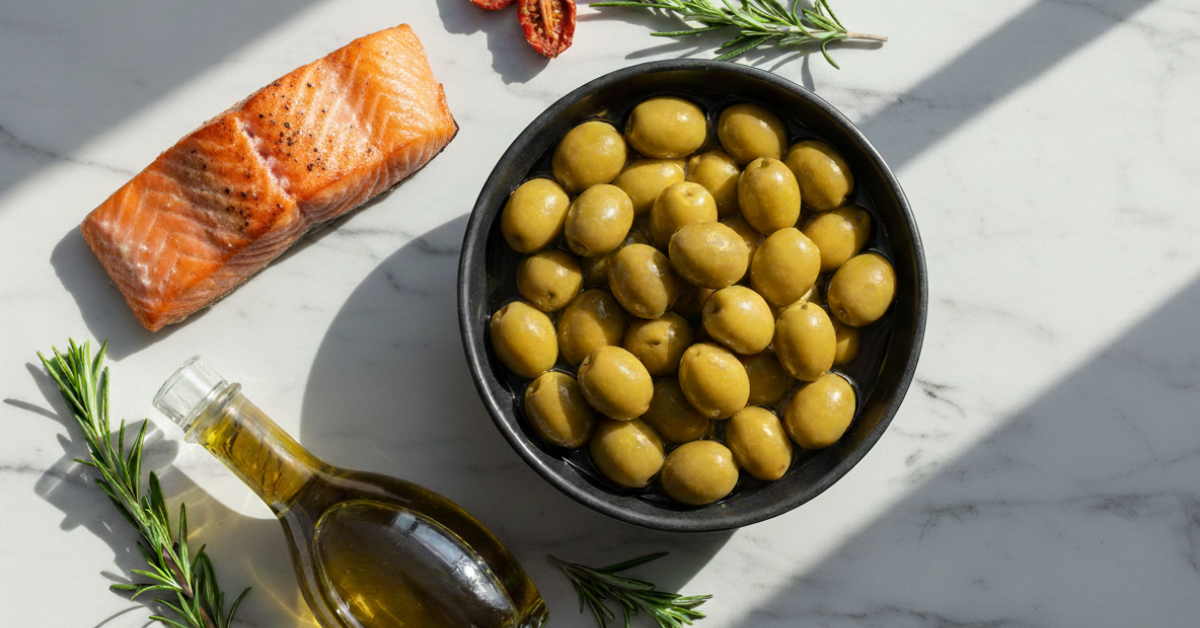
- Fatty fish (salmon, sardines, mackerel)
- Flaxseeds, chia seeds, walnuts
- Pasture-raised eggs (which have a far better ratio than conventional eggs)
But here’s the catch: plant-based omega-3s (like flax) must be converted by your body into the active forms (EPA/DHA)—and that conversion is inefficient (only about 10–15% makes it through).
That’s why whole fish—not just supplements—is so powerful.
How This Affects Your Weight
Chronic inflammation from an imbalanced fat ratio:
- Disrupts insulin signaling → your body stores fat instead of burning it
- Increases visceral fat (the kind around your organs)
- Fuels cravings and energy crashes
- Slows metabolism over time
In other words: even if you’re eating fewer calories, an inflamed metabolism holds onto weight as a protective response.
A Simple Shift That Makes a Big Difference
You don’t need to overhaul your kitchen overnight. Start with one change:
- Swap vegetable oils for olive oil or avocado oil (both are low in omega-6)
- Choose pasture-raised eggs when possible (omega-6:omega-3 ratio of 1.3:1 vs. 19.4:1 in conventional eggs)
- Eat fatty fish 2–3 times per week (think salmon, sardines, herring)
- Read labels: if “soybean oil,” “corn oil,” or “vegetable oil” is near the top, it’s likely pro-inflammatory
This isn’t about perfection. It’s about shifting the balance back toward calm.
And What About Fish Oil Supplements?
Research shows that fish oil pills don’t offer the same benefits as eating whole fish. Why? Because food works as a system—fat, protein, vitamins, and minerals all interact. Isolating one component rarely replicates the whole effect.
So if you can, choose the food over the pill.
Your Body Wants to Burn Fat—Let It
You don’t need willpower.
You need clarity.
You need clarity.
By reducing hidden omega-6 oils and increasing real omega-3s, you’re not just “eating healthy”—you’re calming the fire that’s keeping your weight stuck.
Start small. Be kind to yourself.
Your metabolism—and your future self—will thank you.
Your metabolism—and your future self—will thank you.
With care,
[Your Brand Name]
[Your Brand Name]