Quick Answer: Unlike glucose, fructose barely raises blood sugar directly, which is precisely why it is dangerous in excess—it goes straight to the liver to be converted into fat. Fructose in whole fruit is buffered by fiber, but concentrated sources in soda, fruit juice, agave, and high-fructose corn syrup rapidly overload the liver. Over time, this leads to fatty liver disease, elevated triglycerides, and insulin resistance—even when fasting glucose looks normal on paper.
Have you ever looked at your bloodwork, seen a normal fasting glucose number, and assumed your metabolism was perfectly fine?
Many patients are surprised to learn that fatty liver or early insulin resistance was quietly developing underneath that reassuring number. Fructose does not play by the same rules as standard blood sugar, making it easy to miss if you only look at surface-level labs.
What Fructose Actually Is
Sugar is not a single compound; it is a family of related molecules. The two most common are glucose and fructose, which often travel together (table sugar, for example, is 50% glucose and 50% fructose).
Glucose is the universal cellular fuel used directly by your brain, muscles, and tissues, circulating freely in your bloodstream where standard tests measure it. Fructose, by contrast, gives fruit its sweetness and tastes significantly sweeter than glucose.
However, your peripheral cells cannot use fructose directly for energy. It must travel straight to the liver for metabolic processing, making the liver the sole shock-absorber for every gram you consume.
Why Fructose Hides from Standard Glucose Tests
Because glucose circulates throughout the body, standard fasting blood tests easily detect spikes and surges.
Fructose bypasses systemic circulation almost entirely, moving directly from the gut to the hepatic portal vein. This means it barely nudges your fasting glucose reading, even in large doses.
The traditional test used to assess metabolic health was never designed to catch fructose overload. As a result, early metabolic stress can quietly accumulate for years while routine bloodwork appears unremarkable.
| Sugar Type | Primary Destination & Impact |
| Glucose | Goes to brain & muscles; triggers insulin & raises blood sugar. |
| Fructose | Goes straight to liver; hidden from standard blood sugar tests. |
What Happens When Fructose Overloads the Liver
When you consume fructose in small amounts through whole fruit, your liver processes it effortlessly.
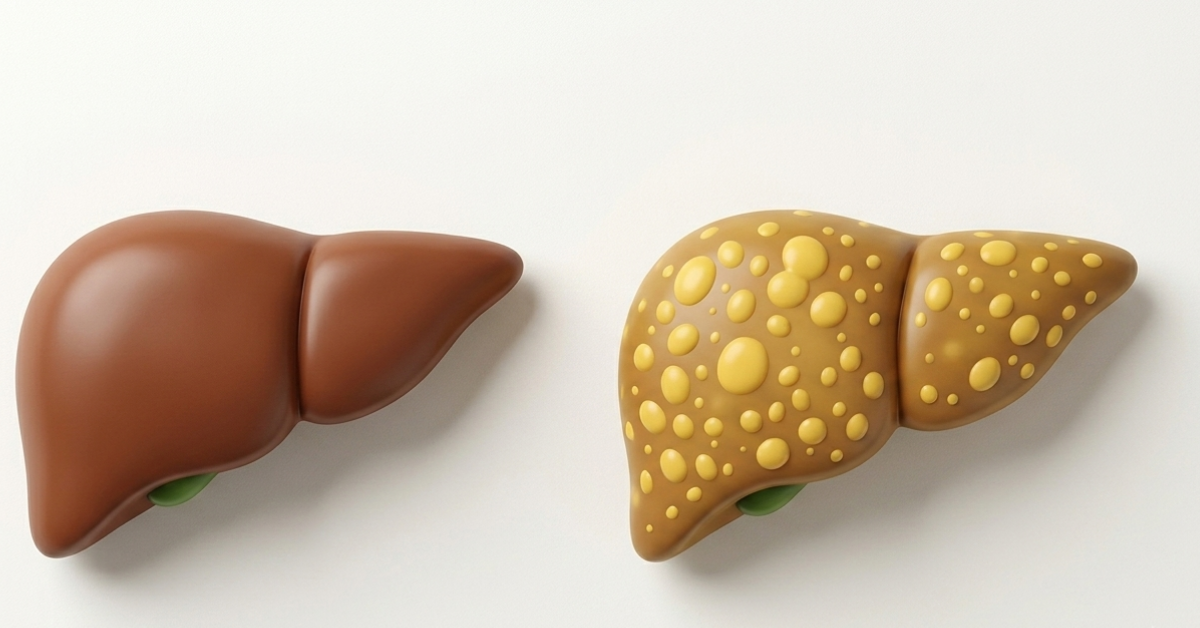
When large, rapid doses arrive from soda, fruit juice, or agave, the liver reaches capacity and initiates de novo lipogenesis—literally synthesizing new fat from sugar.
Over time, these lipid droplets accumulate directly inside liver cells, leading to non-alcoholic fatty liver disease (NAFLD)—fat building up in a liver that has never touched alcohol.
How Fatty Liver Drives Insulin Resistance
A fat-laden liver cannot carry out its metabolic duties efficiently, and one of its first impaired functions is insulin sensitivity.
The liver becomes insulin-resistant locally, failing to shut off glucose production when it should, even while peripheral muscles still seem sensitive.
Because the liver acts as the primary conductor of systemic glucose regulation, a fatty, insulin-resistant liver eventually drags whole-body insulin sensitivity down with it, setting the stage for prediabetes.
Whole Fruit vs. Commercial Fructose
It is crucial not to fear whole fruit; avoiding it would be the wrong clinical takeaway.
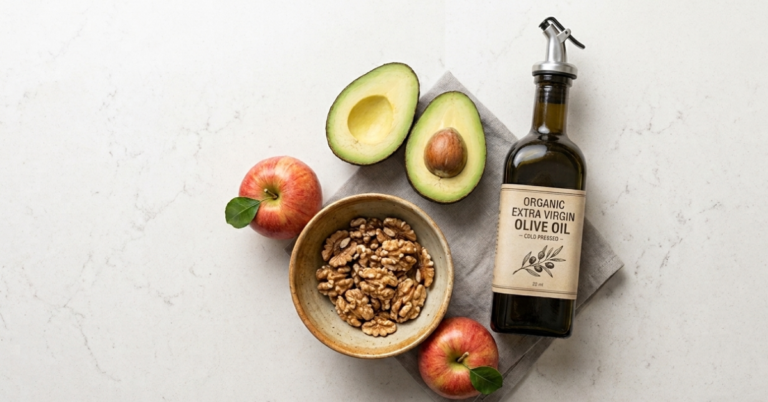
The fructose inside a whole apple arrives bound in a physical matrix of viscous fiber, water, and polyphenols, which slows gastric emptying and paces liver exposure.
| Source | Absorption Speed & Liver Impact |
| Whole Fruit | Slow delivery; buffered by natural fiber. |
| Liquid / Refined | Rapid delivery; overloads liver & drives fat storage. |
Conversely, commercial fructose in sodas, condiments, and “natural” syrups arrives as a concentrated, fiberless flood, forcing the liver into fat-production mode.
The Downstream Metabolic Consequences
Chronic excess of commercial fructose extends its damage beyond liver fat accumulation.
As the liver packages new fat, serum triglycerides rise, while fructose metabolism simultaneously generates uric acid as a byproduct, raising gout risk and blood pressure.
Furthermore, fructose does not stimulate insulin or leptin (your satiety hormones) the way glucose does, meaning liquid fructose calories fail to register full signals, driving unintentional overconsumption.
None of these detrimental effects apply to intact fruit eaten as food. They stem from hidden, fiber-stripped sugars engineered into modern diets.
In My Clinical Practice
In my practice, this is one of the quietest patterns I evaluate in patients who feel they are doing everything right.
Fatty liver rarely announces itself with early symptoms, and normal fasting glucose can offer false reassurance.
Once we identify hidden sources of liquid fructose and swap them for intact, fiber-rich alternatives, hepatic stress decreases, insulin sensitivity recovers, and metabolic order is restored.
Frequently Asked Questions
Does fructose raise blood sugar like glucose does? Not directly. Fructose is processed almost entirely by the liver rather than circulating in the bloodstream, so it barely affects fasting glucose readings even in large amounts.
Can you have fatty liver disease with normal blood sugar? Yes. Fatty liver disease frequently develops from excess fructose intake well before fasting glucose numbers become abnormal, as hepatic insulin resistance precedes systemic resistance.
Is fruit juice as harmful as soda for the liver? Fruit juice lacks the protective fiber matrix of whole fruit, delivering concentrated fructose rapidly to the liver in a manner biologically similar to soda or agave nectar.
Why do people confuse fruit sugar with commercial fructose? Because both are named “fructose,” people assume they behave identically. Whole fruit contains fiber that drastically slows absorption, whereas commercial sweeteners deliver a fast, unbuffered burden to the liver.
Should I stop eating fruit to protect my liver? No. Whole fruit contains essential fiber and nutrients that slow absorption. The clinical concern is concentrated, fiberless sources like sodas, juices, and sweetened processed foods.